What does the solo life in Rust actually look like when one player holds an OP monument alone
Want articles like this for your own video to promote it on YouTube and Google? Order them through the Telegram bot @sat_sit_bot. Articles with your video embedded are written and posted by the bot itself — on popular topical sites (no ads). Free trial — 50 articles.
· based on the channel Blooprint
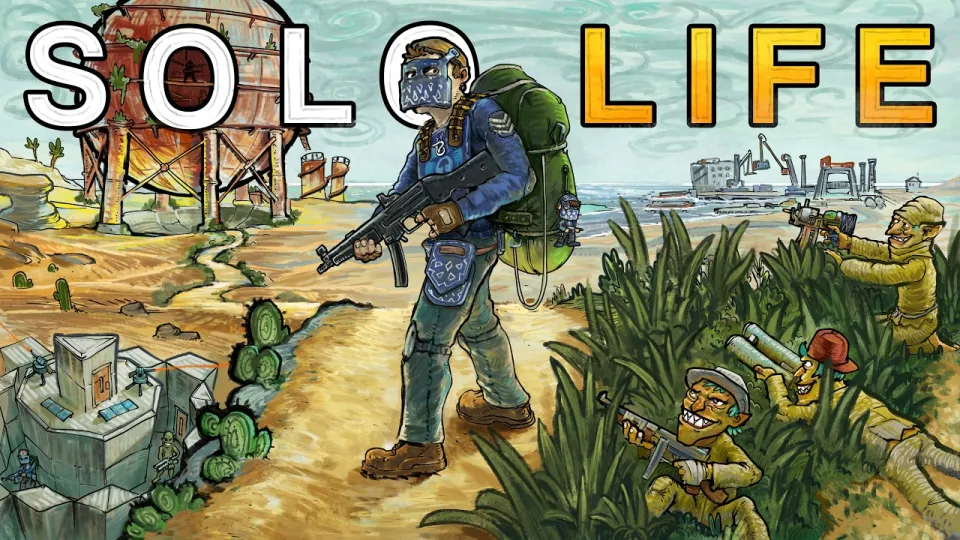
Rust solo life is a self-imposed style of play where one player runs a wipe without teammates, controlling monuments, building a compact base and defending it against groups alone. Blooprint's The Solo Life V16 is exactly that: a fully solo run built around holding an OP monument while several angry neighbors try to take it from him. The episode is a practical look at how one player survives when every fight, farm run and raid defense has to be handled without a partner.
If you want to try the same pace yourself, you can pick up War Thunder for free through this link and claim the bonus — the same sponsor offer that opens the video.
Why holding an OP monument solo is the core of this Rust run
Holding a high-value monument alone means trading numbers for position, timing and information. An OP monument gives a solo player loot density that a small starter base cannot match, but it also puts you on the map: every neighbor knows where the action is and who is farming it. In the video the monument becomes the anchor of the whole wipe — it is where the loot comes from, where the fights start and where the neighbors eventually decide to push.
The solo answer to that pressure is not to fight everyone at once but to make each fight expensive. That usually means:
- Claim the monument early, before groups settle into their own routines.
- Keep the base close enough to contest the monument but far enough to avoid being watched from a window.
- Rotate loot out fast so a single death does not wipe your progress.
- Use the monument's own cover and verticality instead of open ground fights.
That structure is what makes the run readable: the monument is the objective, the base is the fallback, and every neighbor is a timer counting down to the next raid.
How a solo player handles multiple angry neighbors
Multiple angry neighbors change the math of every decision, because a solo player cannot win a war of attrition. The video's framing makes this clear: the pressure comes not from one group but from several parties who each want the monument loot or the base spot. Fighting them one by one is the only viable approach, and that requires picking fights you can finish quickly.
In practice, solo defense against several neighbors comes down to a few habits. Keep your base small and layered so a single wall break does not expose the loot room. Store the good stuff deep and keep a cheap, visible decoy room with something worth blowing up. Repair and upgrade after every skirmish instead of waiting for the next raid window. And when a fight starts, commit fully — a half-hearted solo push usually ends with both sides losing kits and the neighbors coming back with more people.
What the base build and starter choices reveal about solo survival
The base is the real main character in any solo Rust run, and the episode leans on a compact, cheap-to-upgrade design. A solo base has to do three jobs at once: protect loot, let you shoot from inside, and cost little enough that losing it does not end the wipe. That is why the starter layout gets so much attention — every wall and every doorway is a decision about how long you can hold.
The practical checklist for a solo base that survives neighbors:
- One entrance that can be watched from a shooting floor.
- Honeycomb on the side facing the monument, where pushes come from.
- A separate, cheap bunker or stash for the loot you cannot afford to lose.
- Enough space for a workbench and furnaces without turning the base into a giant, obvious target.
- A second small base or stash far enough away to restart from after a raid.
Solo raiding works the same way in reverse: you raid what you can carry, you raid when the owners are offline or distracted, and you never start a raid you cannot finish before the neighbors notice.
Where night fights and visibility still go wrong
Night fights remain the weakest link in a solo run, and the video's audience notices it immediately. Toggling night vision does not magically fix dark scenes — the image stays murky, silhouettes blur together and shooting at range becomes guesswork. For a solo player this matters more than for a group, because there is no teammate to cover the angle you cannot see.
The workaround is preparation rather than better eyesight. Carry a light source you control, avoid open ground after dark, and treat night as farm and travel time instead of fight time. If a neighbor pushes at night, fall back to a chokepoint where the fight happens at a distance you can actually read. Most solo deaths at night come from taking a fight in terrain you cannot see, not from losing an aim duel.
How monument plays around Dome and Cargo fit a solo wipe
Monument play is where a solo run earns its loot, and the video's tags point to the familiar circuit of Dome and Cargo. Dome rewards vertical awareness and quick in-and-out looting; Cargo rewards timing, since the event draws groups and creates third-party fights. Both are high-risk for a solo player and both pay well enough to justify the risk.
A workable solo loop looks like this: farm enough to craft a kit you can lose, hit the monument during a low-traffic window, extract the best items first, and only then come back for the rest. Parachute plays fit the same logic — they get you onto a monument or out of a losing fight without using the main entrance that everyone is watching. The goal is never to win the monument; it is to leave with more than you brought.
What viewers keep asking about solo Rust and friendly neighbors
The most common questions around this series are about allies, series order and whether solo content is worth watching at all. A friendly neighbor who shows up in the raid defense becomes the breakout character of the episode, and the audience immediately asks for a duo run with him. Others point out that the series arrived right after A Solo's Journey 4, which makes the release schedule feel relentless rather than slow.
There is also a recurring observation about groups wasting time on a single solo player: three people spending twenty minutes chasing one target are losing farm and raid time of their own. That is the quiet advantage of solo play — you are never the one who has to coordinate. And the appeal of the format is clear from the comments: solo content turns a chaotic, hostile game into something calm and watchable, which is why so many solo players say they prefer watching it to playing in groups.
Useful links
- War Thunder free bonus (PC and consoles)
- War Thunder mobile bonus
- Blooprint on Twitch
- Blooprint on Kick
- Blooprint on TikTok
The takeaway from this solo life episode
The Solo Life V16 works as a solo Rust primer because it shows the whole loop in one run: claim a monument, build small, defend alone and accept that some fights are lost on purpose. The friendly neighbor and the raid defense are the highlights, but the real lesson is that solo play is a discipline of preparation rather than raw aim. Blooprint's channel is the author of this breakdown, and the episode is a solid reference for anyone learning how to solo in Rust without a group behind them. If you want to support the series, grab the free War Thunder bonus here and keep an eye on the next solo installment.
Key takeaways
- Blooprint's The Solo Life V16 shows a fully solo run built around holding an OP monument while multiple neighbors try to push him out.
- The video was published on 30 September 2026 and is framed as a wrap-up of the solo series, following closely after A Solo's Journey 4.
- A friendly neighbor becomes a key ally in the raid defense, and viewers repeatedly ask for a duo with him in the next run.
- Night-time fights stay a weak point: the night vision toggle is a running joke because visibility in dark scenes is still poor.
- The episode leans on solo fundamentals: monument control, starter base choices, online raid defense and parachute plays around Dome and Cargo.
Questions & answers
Is Rust actually playable as a solo player?
Yes, but the style is different from group play. A solo player survives by controlling one valuable monument, keeping a small layered base, and choosing fights that can be finished quickly. Numbers matter less than preparation, timing and knowing when to walk away from a losing fight.
How do you defend a solo base against several neighbors at once?
Keep the base compact and honeycombed on the side facing the monument, store loot deep and keep a cheap decoy room. Repair and upgrade between skirmishes, and fight from chokepoints where only one attacker can reach you at a time. A solo player wins defense by making each push expensive, not by out-fighting everyone.
Why is night fighting so hard in Rust even with night vision?
Night vision improves contrast but does not make dark scenes truly readable, so silhouettes and range stay unreliable. For a solo player the safer approach is to treat night as farm and travel time, carry a light source you control, and avoid open-ground fights after dark.
Should a solo player team up with a friendly neighbor?
A trusted neighbor can be the difference in a raid defense, as the episode shows, but alliances in Rust are temporary and information is a weapon. Team up for specific fights, keep your loot room private, and never assume the alliance survives the next wipe or the next raid window.
Source: Rust - THE SOLO LIFE V16 · Markdown version